How The Mighty Maya Civilization Crumbled
 Rachel Fowler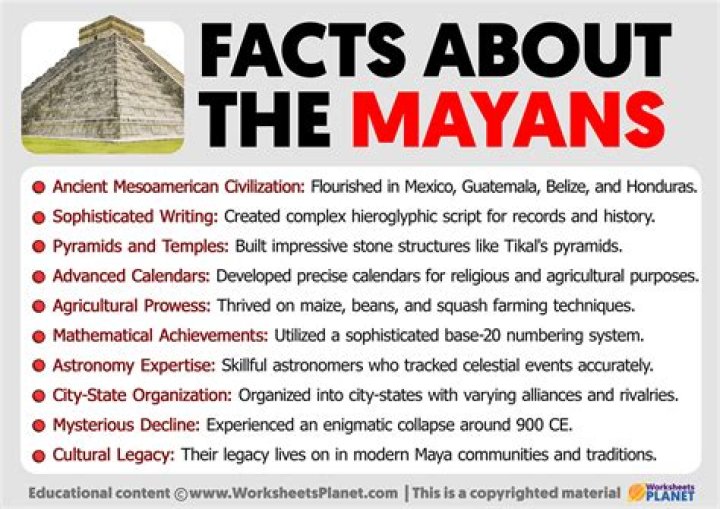
The Maya civilization, a Mesoamerican civilization known for its sophisticated writing system, art, architecture, and mathematics, experienced a period of decline and eventual collapse around the 9th century CE. The reasons for this collapse are complex and multifaceted, and remain a topic of ongoing research and debate among scholars.
Some of the factors that may have contributed to the Maya collapse include environmental changes, such as prolonged drought, as well as political instability, warfare, and disease. Additionally, the Maya may have faced challenges related to overpopulation and resource depletion. It is important to note that the Maya civilization did not completely disappear, and many Maya people continue to live in the region today, preserving their cultural traditions and identity.
The study of the Maya collapse is important for understanding the factors that can lead to the decline of complex societies. It also provides insights into the resilience and adaptability of human civilizations in the face of adversity.
The Maya Collapse
The Maya collapse was a complex and multifaceted event that remains a topic of ongoing research and debate. Some of the key aspects that may have contributed to the collapse include:
- Environmental changes
- Political instability
- Warfare
- Disease
- Overpopulation
- Resource depletion
- Trade disruptions
- Internal strife
- External pressures
- Cultural changes
These factors are interconnected and complex, and their relative importance is still debated by scholars. However, it is clear that the Maya collapse was a major turning point in the history of Mesoamerica, and its effects are still felt today.
Environmental changes
Environmental changes are considered to be a major contributing factor to the Maya collapse. The Maya civilization flourished during a period of relatively stable climate conditions. However, around the 9th century CE, the climate in Mesoamerica became more arid and less predictable. This change in climate may have led to widespread drought, which in turn could have caused crop failures, famine, and disease. Additionally, deforestation and other environmental changes may have contributed to the decline of the Maya civilization.
One of the most important pieces of evidence for the role of environmental change in the Maya collapse is the presence of drought-resistant plants in the archaeological record. These plants, such as agave and prickly pear cactus, became more common in the Maya diet during the period of decline, suggesting that the Maya were adapting to a drier climate. Additionally, there is evidence of increased flooding and erosion during this period, which may have damaged Maya infrastructure and agriculture.
The Maya collapse is a complex event that cannot be attributed to any single factor. However, environmental change is considered to be one of the most important contributing factors. By understanding the connection between environmental change and the Maya collapse, we can better understand the challenges that complex societies face in the face of environmental change.
Political instability
Political instability was another major contributing factor to the Maya collapse. The Maya civilization was divided into a number of independent city-states, each with its own ruler. During the Classic period (250-900 CE), many of these city-states were engaged in warfare with each other, which weakened the Maya civilization as a whole. Additionally, there is evidence of internal strife within Maya city-states, as different factions competed for power.
Political instability can lead to a number of problems that can contribute to the collapse of a civilization. For example, political instability can lead to economic decline, as trade and investment are disrupted. Additionally, political instability can lead to social unrest and violence, as different factions vie for power. In the case of the Maya, political instability may have played a role in the decline of the Maya civilization by weakening the Maya city-states and making them more vulnerable to environmental and other challenges.
The connection between political instability and the Maya collapse is a complex one, and there is still much debate about the relative importance of different factors. However, it is clear that political instability was a major contributing factor to the decline of the Maya civilization.
Warfare
Warfare was a major contributing factor to the Maya collapse. The Maya civilization was divided into a number of independent city-states, each with its own ruler. During the Classic period (250-900 CE), many of these city-states were engaged in warfare with each other, which weakened the Maya civilization as a whole. Additionally, there is evidence of internal strife within Maya city-states, as different factions competed for power.
- Title of Facet 1
Warfare can lead to economic decline, as trade and investment are disrupted.
- Title of Facet 2
Warfare can lead to social unrest and violence, as different factions vie for power.
- Title of Facet 3
Warfare can lead to the loss of human life and resources, which can weaken a civilization.
- Title of Facet 4
Warfare can lead to the destruction of infrastructure and other important resources, which can further weaken a civilization.
The connection between warfare and the Maya collapse is a complex one, and there is still much debate about the relative importance of different factors. However, it is clear that warfare was a major contributing factor to the decline of the Maya civilization.
Disease
Disease was a major contributing factor to the Maya collapse. The Maya were exposed to a number of diseases, including smallpox, measles, and malaria, which were introduced to the Americas by European colonists. These diseases had a devastating impact on the Maya population, which was already weakened by environmental stress and warfare. In some cases, entire Maya cities were abandoned as a result of disease outbreaks.
The connection between disease and the Maya collapse is a complex one, and there is still much debate about the relative importance of different factors. However, it is clear that disease played a significant role in the decline of the Maya civilization. By understanding the connection between disease and the Maya collapse, we can better understand the challenges that complex societies face in the face of disease outbreaks.
Today, disease continues to be a major challenge for many communities around the world. By learning from the Maya collapse, we can better prepare for and respond to disease outbreaks in the future.
Overpopulation
Overpopulation is a major contributing factor to the Maya collapse. The Maya civilization flourished during a of relatively stable population growth. However, by the 9th century CE, the Maya population had grown to unsustainable levels. This may have put a strain on the Maya's resources, leading to environmental degradation, warfare, and disease. Additionally, overpopulation may have contributed to the Maya's political instability, as different factions competed for control of limited resources.
The connection between overpopulation and the Maya collapse is a complex one, and there is still much debate about the relative importance of different factors. However, it is clear that overpopulation was a major contributing factor to the decline of the Maya civilization.
Today, overpopulation continues to be a major challenge for many communities around the world. By understanding the connection between overpopulation and the Maya collapse, we can better understand the challenges that complex societies face in the face of population growth. By taking steps to address overpopulation, we can help to prevent future collapses and ensure a sustainable future for our planet.
Resource depletion
Resource depletion is the consumption of a resource faster than it can be replenished. This can lead to a number of problems, including environmental degradation, economic decline, and social unrest. Resource depletion was a major contributing factor to the Maya collapse.
- Deforestation
The Maya cleared large areas of forest to make room for agriculture. This deforestation led to soil erosion, which in turn reduced crop yields. Additionally, the loss of trees reduced the amount of rainfall in the Maya region, which further exacerbated the drought conditions.
- Overhunting
The Maya also overhunted animals, which led to a decline in the animal population. This made it more difficult for the Maya to obtain food, and also reduced the number of animals that could be used for trade.
- Water scarcity
The Maya relied on a number of water sources, including rivers, lakes, and reservoirs. However, as the population grew, the demand for water increased. This led to water scarcity, which in turn led to conflict and disease.
- Soil exhaustion
The Maya practiced slash-and-burn agriculture, which involved clearing a patch of forest, burning it, and then planting crops in the ashes. However, this practice can lead to soil exhaustion, which reduces crop yields. As the Maya population grew, they were forced to clear more and more land for agriculture, which led to soil exhaustion and a decline in crop yields.
Resource depletion was a major contributing factor to the Maya collapse. By understanding the connection between resource depletion and the Maya collapse, we can better understand the challenges that complex societies face in the face of resource scarcity.
Trade disruptions
Trade disruptions were a major contributing factor to the Maya collapse. The Maya civilization was heavily dependent on trade, both for the exchange of goods and for the acquisition of resources. When trade routes were disrupted, the Maya were cut off from essential goods and resources, which led to economic decline, social unrest, and warfare.
- Title of Facet 1: Economic decline
When trade routes were disrupted, the Maya were unable to obtain the goods and resources they needed, which led to economic decline. For example, the Maya relied on trade to obtain obsidian, which was used to make tools and weapons. When trade routes were disrupted, the Maya were unable to obtain obsidian, which led to a decline in the production of tools and weapons.
- Title of Facet 2: Social unrest
Trade disruptions also led to social unrest. When the Maya were unable to obtain the goods and resources they needed, they became increasingly desperate. This led to conflict and violence, as different groups competed for control of scarce resources.
- Title of Facet 3: Warfare
Trade disruptions also led to warfare. When the Maya were unable to obtain the goods and resources they needed through trade, they resorted to warfare to obtain these goods and resources. This led to a number of wars between Maya city-states, which further weakened the Maya civilization.
- Title of Facet 4: Collapse
The combination of economic decline, social unrest, and warfare led to the collapse of the Maya civilization. When the Maya were unable to obtain the goods and resources they needed, they were unable to sustain their civilization. This led to the collapse of the Maya civilization and the abandonment of many Maya cities.
Trade disruptions were a major contributing factor to the Maya collapse. By understanding the connection between trade disruptions and the Maya collapse, we can better understand the challenges that complex societies face in the face of trade disruptions.
Internal strife
Internal strife was a major contributing factor to the Maya collapse. The Maya civilization was divided into a number of independent city-states, each with its own ruler. During the Classic period (250-900 CE), many of these city-states were engaged in warfare with each other, which weakened the Maya civilization as a whole. Additionally, there is evidence of internal strife within Maya city-states, as different factions competed for power.
Internal strife can lead to a number of problems that can contribute to the collapse of a civilization. For example, internal strife can lead to economic decline, as trade and investment are disrupted. Additionally, internal strife can lead to social unrest and violence, as different factions vie for power. In the case of the Maya, internal strife may have played a role in the decline of the Maya civilization by weakening the Maya city-states and making them more vulnerable to environmental and other challenges.
The connection between internal strife and the Maya collapse is a complex one, and there is still much debate about the relative importance of different factors. However, it is clear that internal strife was a major contributing factor to the decline of the Maya civilization.
External pressures
External pressures are a major factor in the collapse of any civilization, and the Maya civilization is no exception. The Maya were subject to a number of external pressures, including:
- Title of Facet 1: Warfare
The Maya were constantly at war with their neighbors, including the Teotihuacanos, the Toltecs, and the Aztecs. This warfare weakened the Maya civilization and made it more vulnerable to other external pressures.
- Title of Facet 2: Trade
The Maya were also subject to economic pressures from their neighbors. The Teotihuacanos and the Toltecs controlled important trade routes, and they used this control to extract tribute from the Maya. This economic pressure further weakened the Maya civilization.
- Title of Facet 3: Climate change
The Maya also faced environmental challenges, including climate change. A series of droughts in the 9th and 10th centuries CE led to crop failures and famine, which further weakened the Maya civilization.
- Title of Facet 4: Disease
The Maya were also exposed to new diseases, such as smallpox and measles, which were brought to the Americas by European colonists. These diseases had a devastating impact on the Maya population, which was already weakened by warfare, economic pressures, and climate change.
External pressures were a major contributing factor to the collapse of the Maya civilization. By understanding the connection between external pressures and the Maya collapse, we can better understand the challenges that complex societies face in the face of external threats.
Cultural changes
Cultural changes are a major factor in the collapse of any civilization, and the Maya civilization is no exception. The Maya underwent a number of cultural changes in the centuries leading up to their collapse, including:
- Title of Facet 1: The decline of the Maya elite
The Maya elite played a central role in Maya society, and their decline was a major factor in the collapse of the Maya civilization. The Maya elite were responsible for organizing and maintaining the Maya state, and their decline led to a decline in the Maya state's ability to function effectively.
- Title of Facet 2: The rise of new religious movements
The Maya underwent a number of religious changes in the centuries leading up to their collapse, including the rise of new religious movements. These new religious movements challenged the traditional Maya elite, and their rise led to a decline in the Maya elite's authority.
- Title of Facet 3: The abandonment of Maya cities
The Maya abandoned many of their cities in the centuries leading up to their collapse. This abandonment was likely due to a combination of factors, including environmental stress, warfare, and disease. The abandonment of Maya cities led to a decline in the Maya civilization's population and economy.
- Title of Facet 4: The loss of Maya knowledge
The Maya lost a great deal of their knowledge in the centuries leading up to their collapse. This loss of knowledge was likely due to a combination of factors, including the abandonment of Maya cities, the decline of the Maya elite, and the rise of new religious movements. The loss of Maya knowledge led to a decline in the Maya civilization's ability to adapt to new challenges.
Cultural changes were a major contributing factor to the collapse of the Maya civilization. By understanding the connection between cultural changes and the Maya collapse, we can better understand the challenges that complex societies face in the face of cultural change.
FAQs on the Maya Collapse
The Maya collapse is a complex and fascinating topic that has been studied by scholars for centuries. Here are some of the most frequently asked questions about the Maya collapse:
Question 1: What caused the Maya collapse?
Answer: The Maya collapse was likely caused by a combination of factors, including environmental stress, warfare, disease, overpopulation, and cultural changes.
Question 2: When did the Maya collapse occur?
Answer: The Maya collapse occurred gradually over a period of several centuries, beginning around the 9th century CE.
Question 3: Did the Maya civilization completely disappear?
Answer: No, the Maya civilization did not completely disappear. Many Maya people continue to live in the region today, preserving their cultural traditions and identity.
Question 4: What can we learn from the Maya collapse?
Answer: The Maya collapse can teach us a lot about the challenges that complex societies face, such as environmental stress, warfare, and disease. By understanding the Maya collapse, we can better prepare for and respond to these challenges in the future.
Question 5: Is there still research being done on the Maya collapse?
Answer: Yes, there is still a great deal of research being done on the Maya collapse. Scholars are using a variety of methods, including archaeology, epigraphy, and environmental science, to learn more about this fascinating topic.
Question 6: Where can I learn more about the Maya collapse?
Answer: There are many resources available to learn more about the Maya collapse. You can find books, articles, and documentaries on the subject. You can also visit Maya ruins and museums to learn more about this ancient civilization.
Summary of key takeaways or final thought:
The Maya collapse was a complex event that was caused by a combination of factors. However, the Maya civilization did not completely disappear, and many Maya people continue to live in the region today. By understanding the Maya collapse, we can better prepare for and respond to the challenges that complex societies face in the future.
Transition to the next article section:
The Maya collapse is a fascinating topic that can teach us a lot about the challenges that complex societies face. By continuing to research and learn about the Maya collapse, we can better understand our own world and the challenges that we face today.
Tips on Understanding the Maya Collapse
The Maya collapse is a complex and fascinating topic that has been studied by scholars for centuries. Here are some tips to help you understand the Maya collapse:
Tip 1: Read books and articles about the Maya collapse.There are many resources available to learn more about the Maya collapse. You can find books, articles, and documentaries on the subject.Tip 2: Visit Maya ruins and museums.Visiting Maya ruins and museums is a great way to learn more about this ancient civilization. You can see the temples, palaces, and other structures that the Maya built. You can also learn about the Maya culture and history.Tip 3: Talk to experts about the Maya collapse.If you have the opportunity, talk to experts about the Maya collapse. Scholars who have studied the Maya collapse can provide you with valuable insights into this complex topic.Tip 4: Be critical of the information you find about the Maya collapse.Not all of the information that you find about the Maya collapse is accurate. Be critical of the information you find and make sure that it is from a credible source.Tip 5: Consider the different perspectives on the Maya collapse.There are many different perspectives on the Maya collapse. Some scholars believe that the collapse was caused by environmental factors, while others believe that it was caused by political or social factors. Consider the different perspectives and try to form your own opinion about what caused the Maya collapse.Summary of key takeaways or benefits:By following these tips, you can gain a better understanding of the Maya collapse. The Maya collapse is a complex topic, but it is one that can be understood by anyone who is willing to learn more about it.Transition to the article's conclusion:The Maya collapse is a fascinating topic that can teach us a lot about the challenges that complex societies face. By understanding the Maya collapse, we can better prepare for and respond to the challenges that we face today.Conclusion
The Maya civilization was a complex and sophisticated society that flourished in Mesoamerica for over a thousand years. However, around the 9th century CE, the Maya civilization began to decline. This decline is known as the Maya collapse. The Maya collapse was a complex event that was caused by a combination of factors, including environmental stress, warfare, disease, overpopulation, and cultural changes.
The Maya collapse is a fascinating topic that can teach us a lot about the challenges that complex societies face. By understanding the Maya collapse, we can better prepare for and respond to the challenges that we face today. The Maya collapse is a reminder that even the most advanced civilizations are not immune to collapse. We must learn from the past in order to build a more sustainable future.